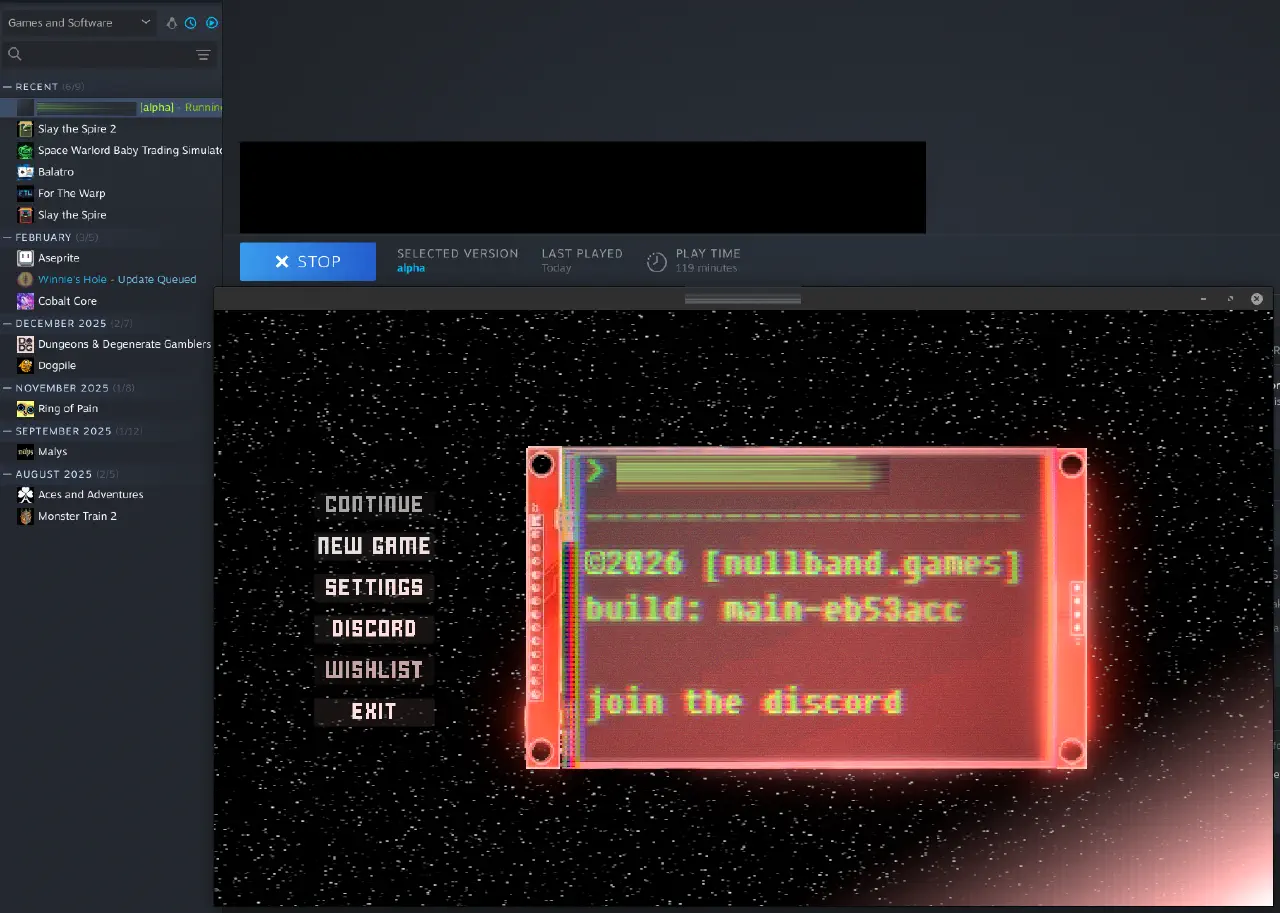
I’ve implemented working Outposts, where you can buy and sell things, repair your ship, and more. It’s been in various stages of working for almost two weeks. However, I haven’t shared it yet because “it’s not ready.”
At an Outpost, you can:
- Repair your hull
- Buy Schematics, which are permanent cross-run upgrades that allow you to craft devices
- Craft Devices from a Schematic (For a cost)
- Sell Devices (at a loss)
- Buy Devices
- Chat with the Outpost AI
- Attack the Outpost, although this is a bad idea
- Just leave
I had to make several new data types, build user interfaces, implement state machines, and write some music (my eldest daughter asked for something like Digital Circus). There’s even a little display screen in the lower-left that shows contextual text about each action. It’s not a mockup, it all works. So, why didn’t I show it off?