The Patchwork Ship Needs a Tutorial
This past Saturday, I presented The Patchwork Ship for live playtesting at 1UpState 2026 in Albany, NY. It’s a great event, and I had a lot of fun talking with other exhibitors like Bozoware and Polyhedron Productions.
The good news is that the month and a half of heads-down bug fixing, content and art additions, and usability improvements paid off! I was complimented on the gameplay, content, and polish, and if someone sat down to play, they stayed until the end (one even returned for a second run). I got a lot of additional content and mechanics requests, so people want more. The bad news? I still have to explain the basic mechanics up front before people “get” it.
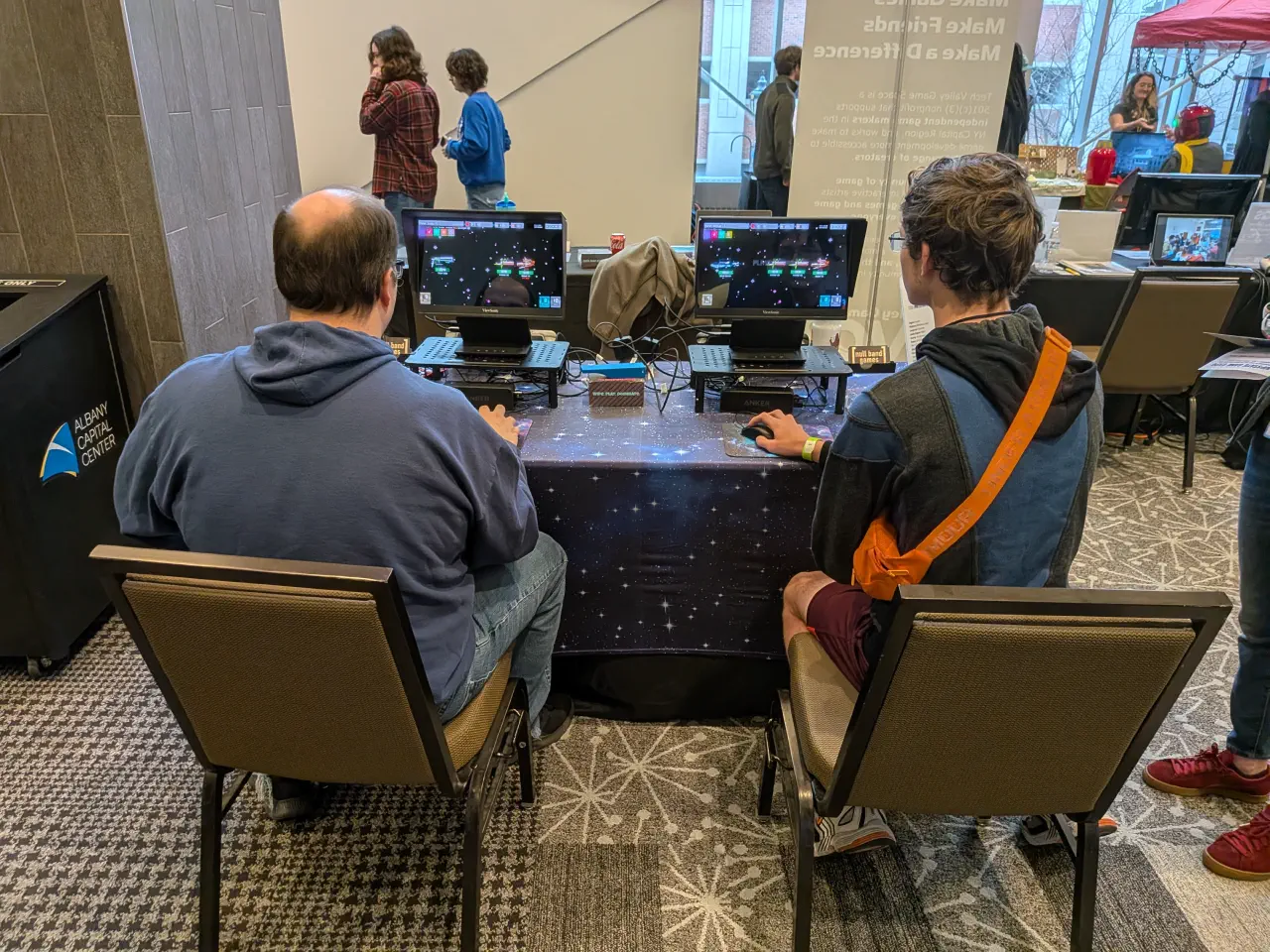
This was the third time I presented in person, and my elevator pitch is well-polished. “The Patchwork Ship is a sci-fi roguelike deckbuilder where you play a brain-in-a-box space probe escaping a dying star. Want to play?” This usually lands.
“What’s it like?” “It’s similar to Slay the Spire card play and FTL’s approach to storytelling.” This usually gets nods, but not always.
“I’ve never played those types of games.” “Cards do things, so you play cards on what you want to affect.” This has worked well enough that I’ve seen people who weren’t familiar with the genres making it to the stage boss, and in some cases winning.
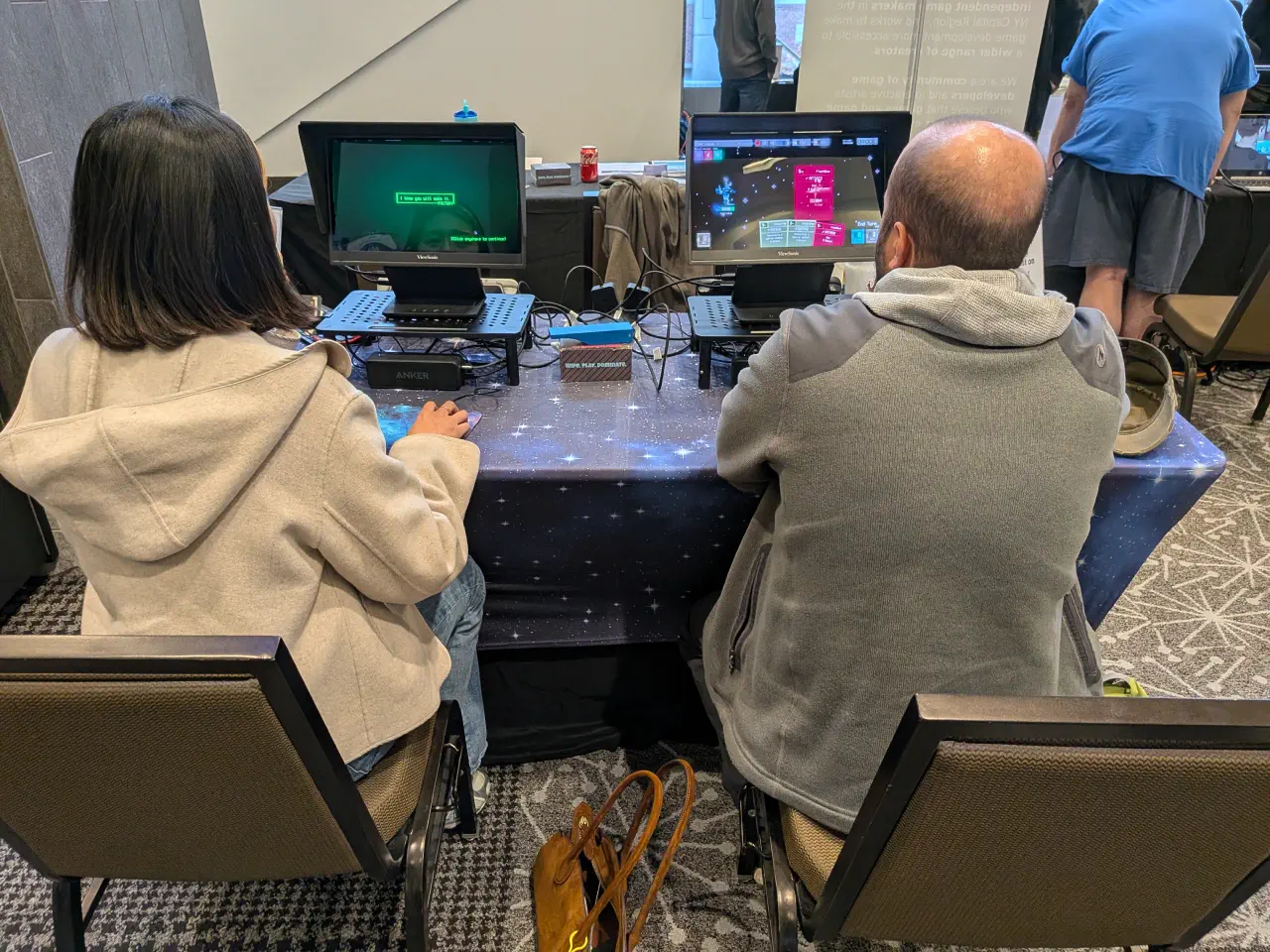
Here’s where things get difficult; if I don’t give an overview of the gameplay, people will struggle to grasp some main concepts, specifically:
- Instead of collecting cards, you collect and manage devices
- Devices can apply effects or fabricate cards for a resource cost
- Devices can be turned on or off
- Effect devices apply at the start of your turn
- When drawing, if you don’t have enough cards, fabrication devices will activate and send cards to your draw pile
- If you don’t want a particular set of cards, turn that device off
- If a device is on, activates, but you don’t have enough resources, it turns off and takes damage
- Too much device damage will disable the device until it’s repaired at an Outpost
- If you run out of energy, it’s like a car running out of gas; you won’t explode, but you can’t do anything either
Based on prior feedback, I massively redesigned the device interfaces to make them easier to understand, including a status bar with hints, visual effects, icons, and more, and these have improved the player experience.
However, the game still doesn’t show you these concepts directly; it starts with a base set of devices and a Loadout phase. In person, this is the time that I walk people through the mechanics, and if I go through my spiel, no additional intervention is required.
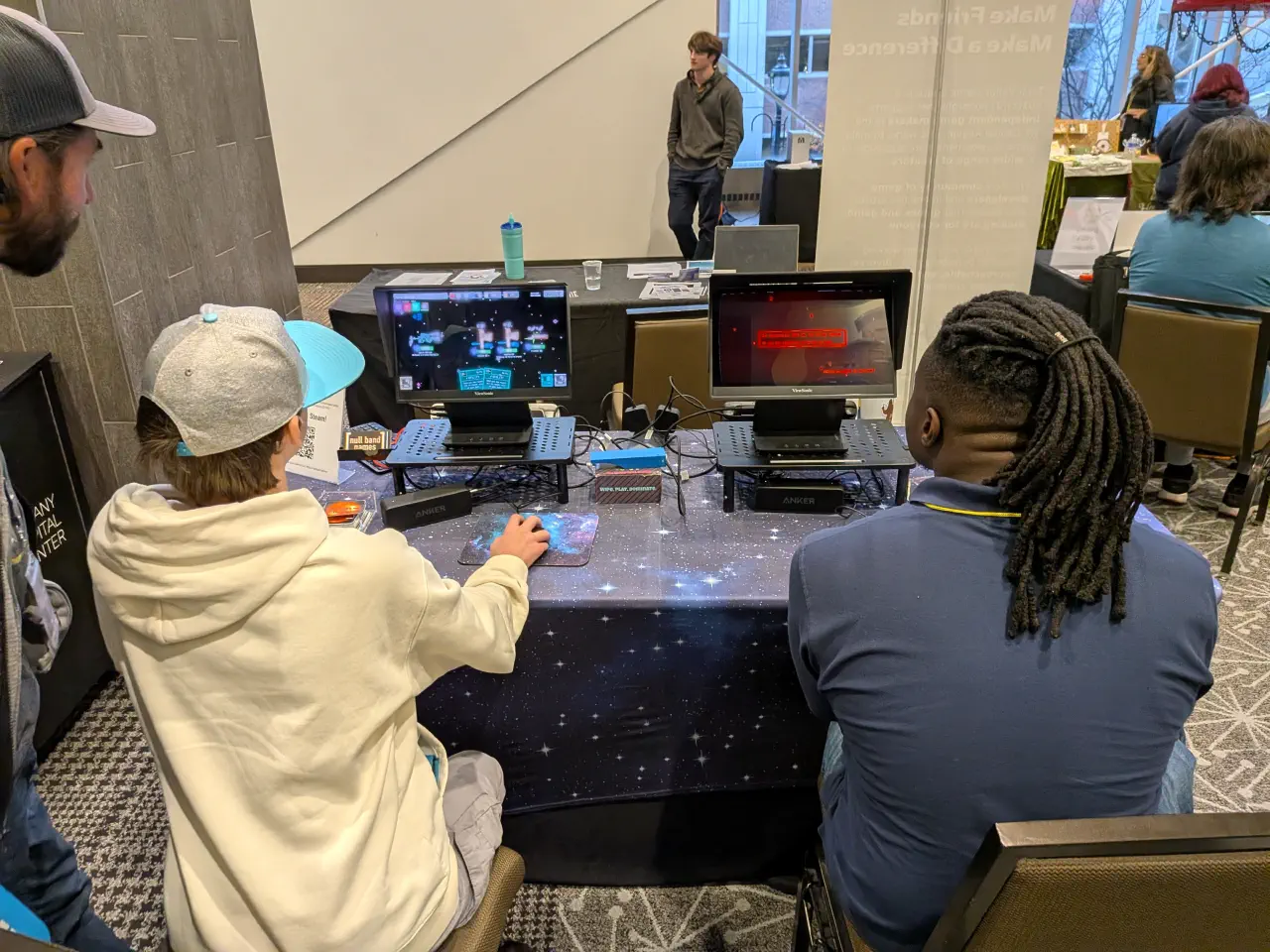
I don’t want to implement a dry, wordy, boring, tutorial, but I also must introduce some concepts up front. The player should be able to skip or abort the tutorial if they want, of course, and I can take steps to make it worthwhile.
Super Mario Bros for NES was great at this; it didn’t tell you how to play, but would introduce each new challenge and you would figure it out through limited choices and exploration, then you would practice it with greater consequences.
With this approach in mind, I could do something like turn all devices off, then have the device manager refuse to go into loadout until you activate something. Contextual hints and status messages can guide the player through turning a device on. A pause and a message, like “There are no cards in the draw pile, so active devices will fabricate cards” then showing it. And so forth.
I have a short list of functional bugs, a long list of usability issues, and the tutorial to churn through. My next in-person event will be Rochester Maker Faire 2026. I’ve got some work ahead of me, and it’s worth it!
I made a few optimizations to the actual booth. Gone are the heavy steel and chipboard monitor stands, replaced with lightweight portable monitor stands. I now have two one-sheets with Steam Wishlist QR codes; one with a FAQ, and the other with a larger logo. Instead of a black tablecloth, I’ve got a galaxy themed wrap. Since controller support isn’t complete, I didn’t even put them out. I had a portable rolling cart this time, which made life a lot easier. The attract screens have several phases to them, which are attention getting.
People scanned the QR code and Wishlisted on the spot (thank you!) and read the FAQ while people were playing.
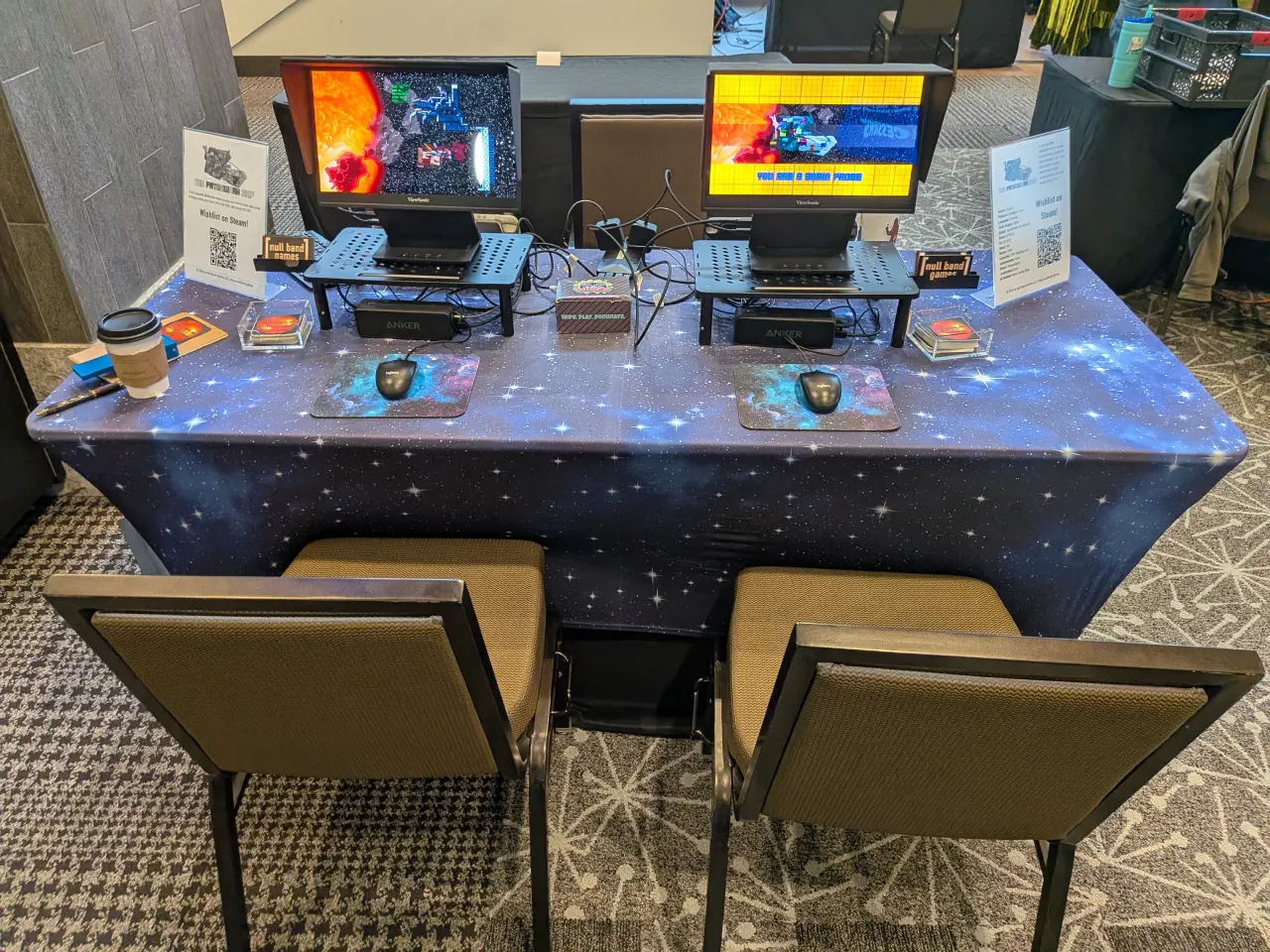
I still made some mistakes. I printed the one-sheets at home on a black and white printer on regular weight paper; grey doesn’t sell the patchwork quilt motif. I left my large Null Band Games logo sign at home, helpfully under my desk where it gathered dust. My stickers, which were hard to read to begin with, no longer match the look and feel of the game. The attract screens, while visually interesting, show no gameplay!
Here’s some things I’ll do differently next time:
- Store the sign with the cart and crate (done)
- Color one-sheets on card stock (done)
- Make new stickers and test the contrast from 10 feet away
- Script some gameplay segments for the attract (this will be helpful for the next trailer)
Wishlist today to be among the first to play the public demo!