Self-Documenting Player Interfaces
At the last expo, I found myself explaining many mechanics to attendees. Some folks figured it out (but still missed details), while others needed guidance and context. The game didn’t crash, but the user experience wasn’t smooth either, and I had to interject to describe what to do next. I’ve been working on addressing those shortcomings by working on making interfaces that guide the user.
A Stash is a random reward, which existed in the Map but didn’t do anything. Mechanically, this interface is very simple, and is up-front about what it does. As I finish wiring the Stash up, I’ll abstract the gifting logic and use it within the Conflict as well to make runs more satisfying.
Card Recycling had been a problem; previously, you would have to click on the Device to open it up. People would drag cards to the Device, which didn’t work because I hadn’t thought of or implemented it. There is now a distinct phase after Player Draw; if the Recycler is available and on (I had to add back the controls), then the Recycler will come up.
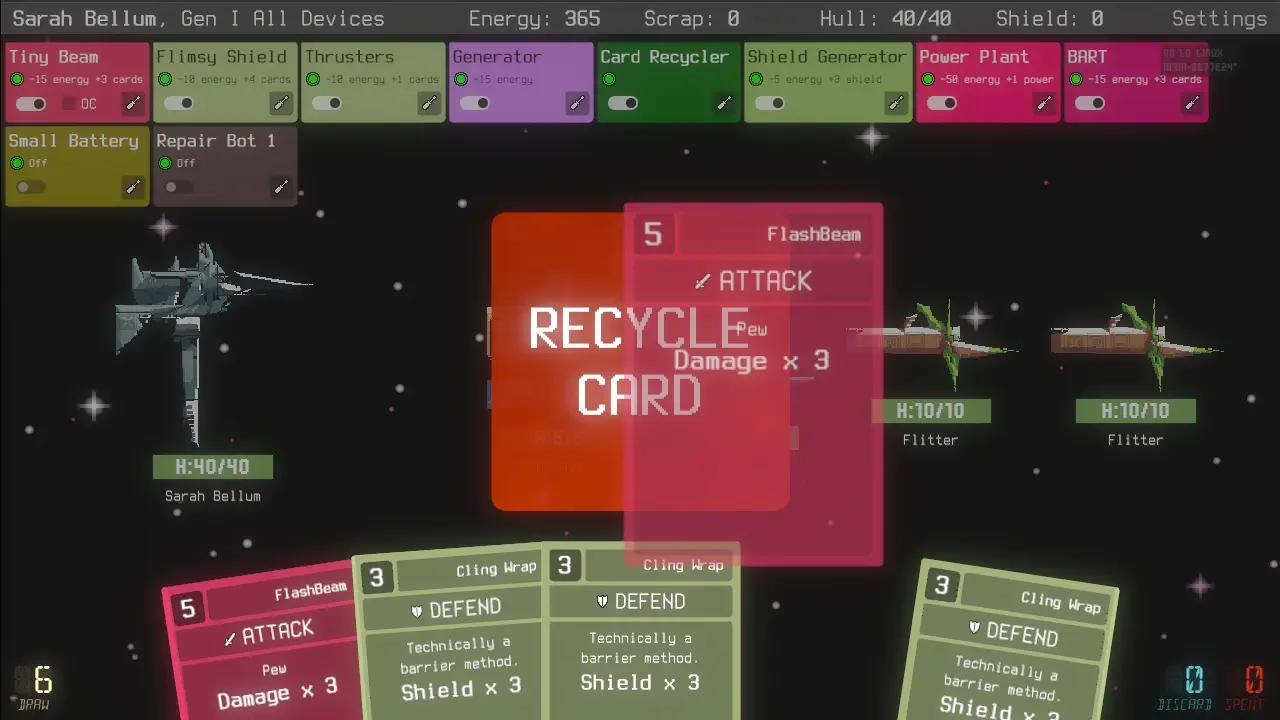
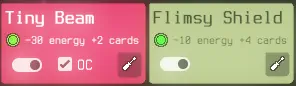
The Device UI has been overhauled; instead of overloaded interfaces and hidden controls, it’s all in the open, including a dynamic summary. You can still inspect a Device for more details.
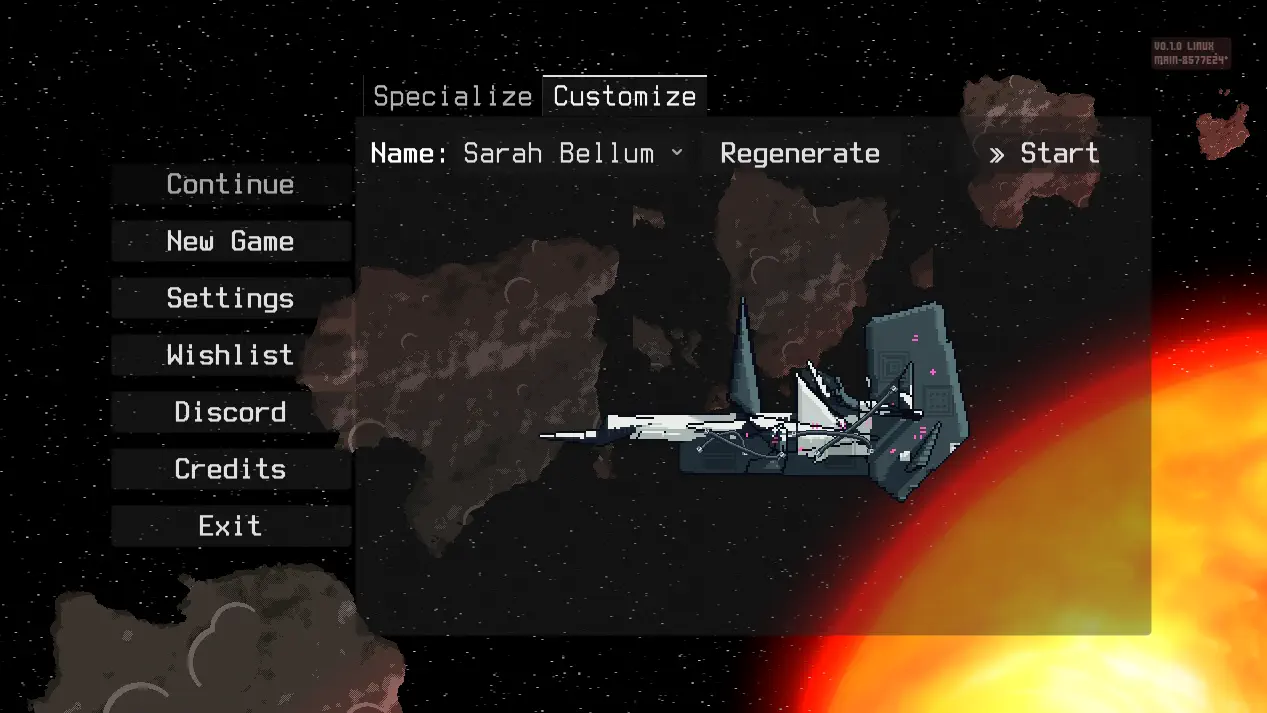
The procedurally generated ships are now part of the refactored new game workflow, which streamlines ship customization. I’ve been experimenting with Godot Tab Containers and will use that on the settings screen moving forward. The scrap absorption and ship save game persistence have also been implemented.
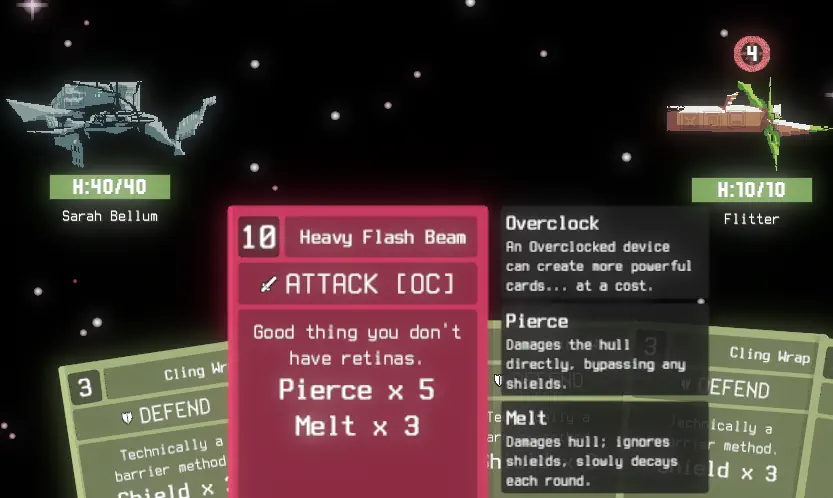
I’ve also reworked Cards; they’re better structured for readability and customization, and are self-describing similar to Slay the Spire. Having just played the Early Access version of Shroom and Gloom (which is fantastic), I may try their keyword-based system instead.
There are dozens of other updates, culminating in a credits system, which included consolidating fonts and eliminating any stock art placeholders. The legacy ship system is completely removed, and dependencies like Gut & godotsteam-gde are current.
My feedback implementation from the last expo isn’t complete yet, but I’ve made significant strides and I’m looking forward to seeing how folks at RocGameFest enjoy it!
If you’re curious about playing, why don’t you wishlist The Patchwork Ship on Steam?