The Patchwork Ship is an upcoming spacecraft survival deckbuilder where a brain-in-a-box probe escapes a dying binary star system.
[Null Band Games] is an indie game studio crafting engaging roguelikes with emergent storytelling. Explore at your own pace with smoothly scaling challenges and puzzles. [About]
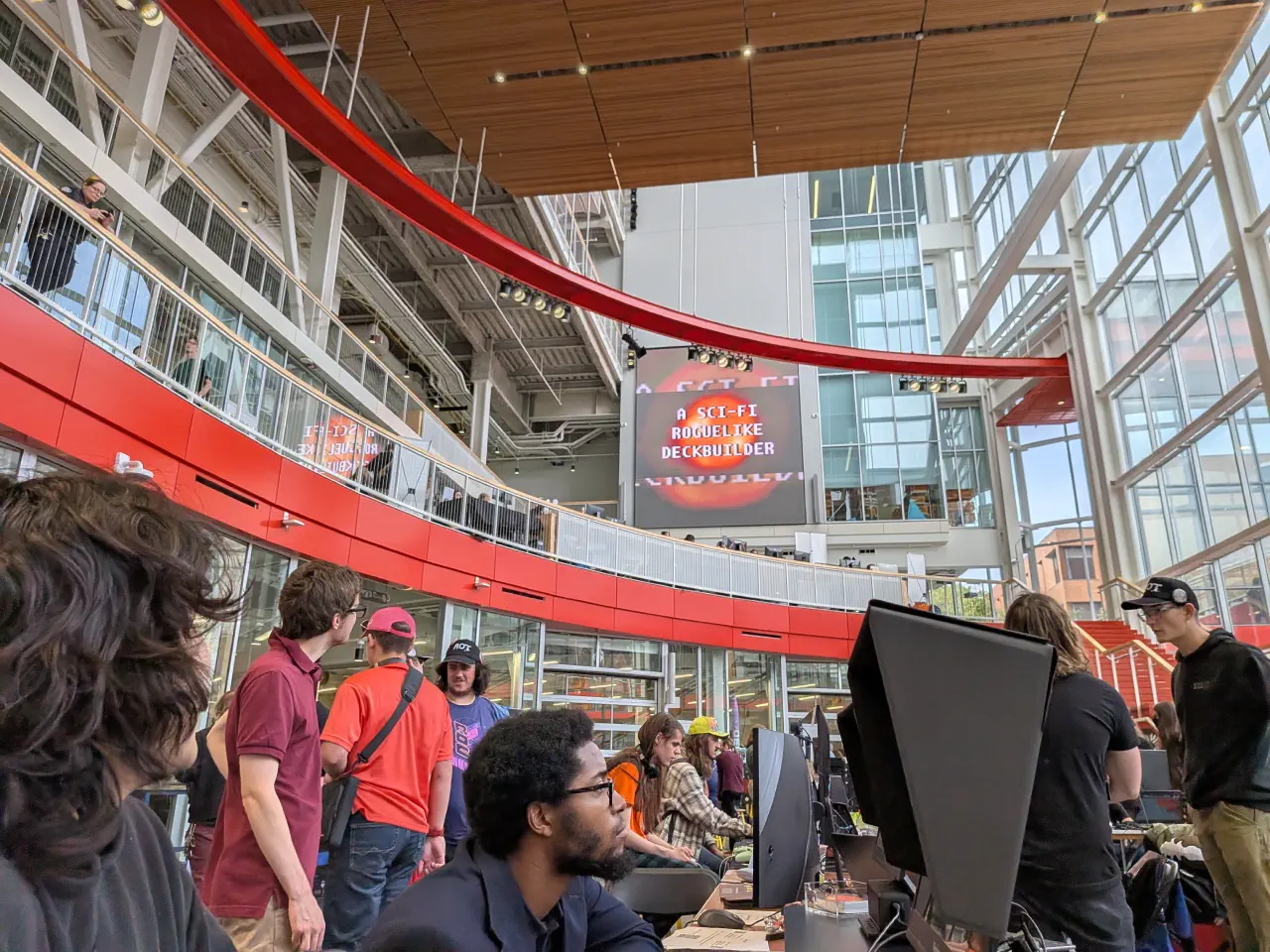
This past Saturday, I presented The Patchwork Ship at the 2026 Rochester Game Festival. Deep appreciation to all who stopped by, asked questions, took stickers and business cards, and of course, played it! So, what’s changed since the last expo two months ago?
The trailer for The Patchwork Ship being projected at the RocGameFest expo
At the last expo, I found myself explaining many mechanics to attendees. Some folks figured it out (but still missed details), while others needed guidance and context. The game didn’t crash, but the user experience wasn’t smooth either, and I had to interject to describe what to do next. I’ve been working on addressing those shortcomings by working on making interfaces that guide the user.
A Stash is a random reward, which existed in the Map but didn’t do anything. Mechanically, this interface is very simple, and is up-front about what it does. As I finish wiring the Stash up, I’ll abstract the gifting logic and use it within the Conflict as well to make runs more satisfying.
I’ve been iterating on the visuals of The Patchwork Ship. I started with an ASCII blob, then a blocky cigar, to colored bricks, a mess of pixels, to its current coherent form.
Three evolutions of The Patchwork Ship generation
The Patchwork Ship is a game about escaping a dying star. You play a brain-in-a-box probe, manufactured by an abandoned sentient factory that is trying their best to save the trapped souls they have in storage. They keep building ship after ship and send them on their way with the hope that some of them will make it. Therefore, having unique ships is essential to the motif of survival construction, along with an evolving journey that keeps each gameplay loop fresh.
I’ve been tackling a lot of rough edges that came up with the live playtesting.
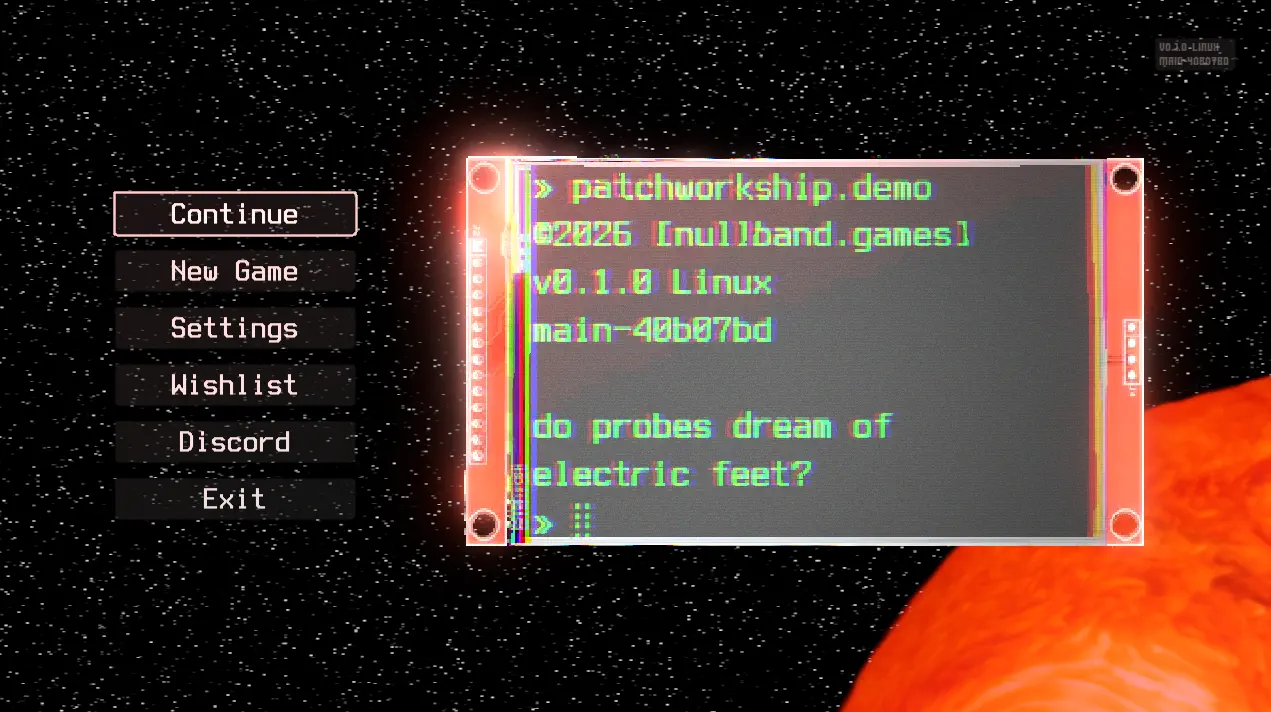
The main menu for The Patchwork Ship with updated fonts, versioning, and fortune cookie.
As I incrementally built up the game, I iterated through multiple fonts; some for aesthetics, some for functionality. What resulted was that I had a ton of fonts installed, but not a lot of consistency. I started with an issue with extended characters not showing, and that revealed a much bigger problem. I ended up swapping almost all fonts throughout the entire game with a low number of highly reused fonts. That also means all interfaces have access to the primary set of font faces; regular, italic, bold, and bold + italic.
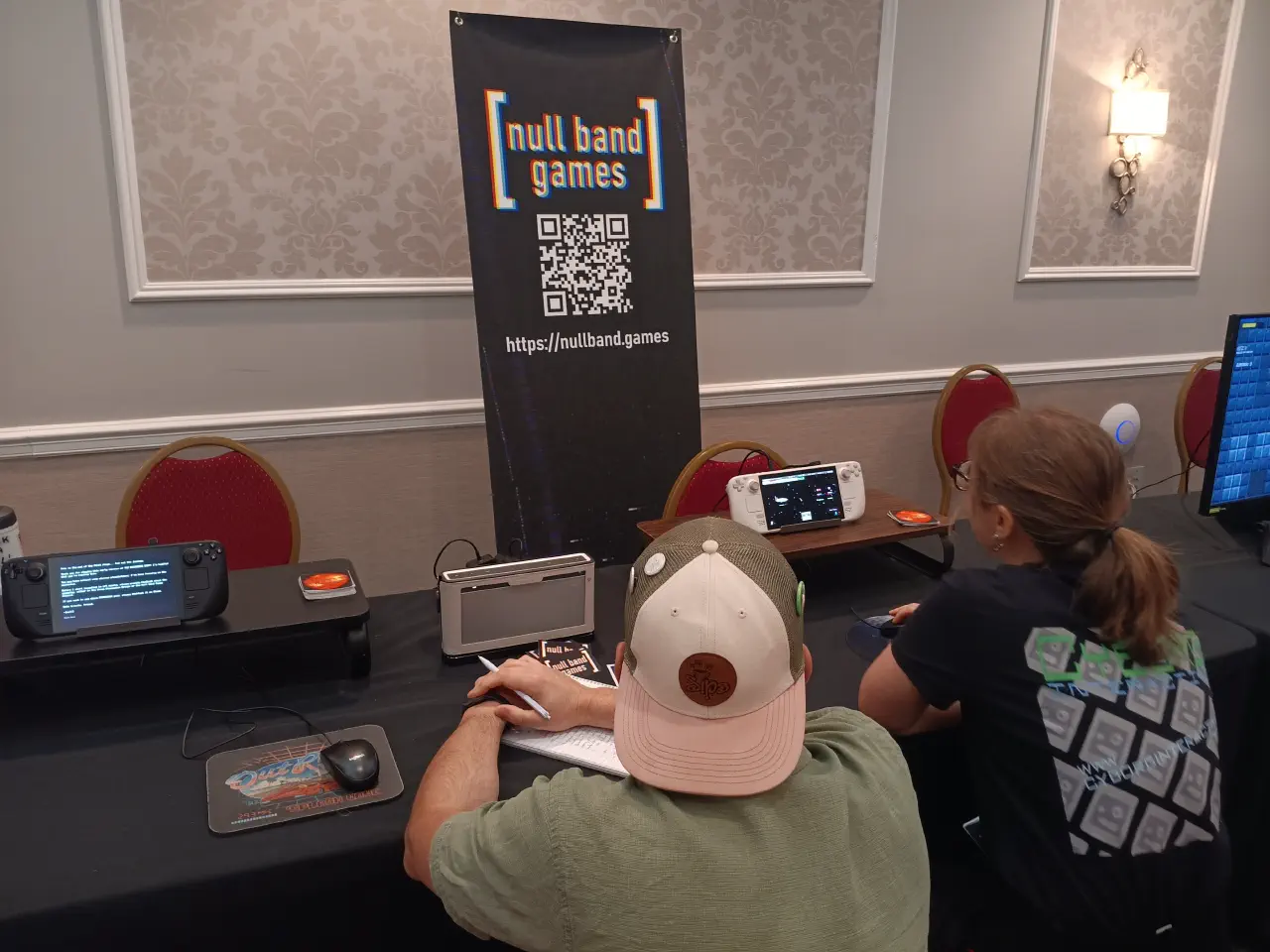
The first public playtest of The Patchwork Ship at the Summer 2026 Lake George Games Expo was a success with a massive amount of takeaways! All photos were taken with verbal consent.
An attendee playtesting The Patchwork Ship and giving feedback to Jon. Photo credit: Alexander Hess
There were over 400 tickets sold to the event and I was busy demoing all day. I ended up with five pages of handwritten notes as I watched people play and asked them about their perspectives. I’m really deeply appreciative of the time people spent playing and the depth of the feedback that I got!